
We've run the businesses we now build for.
Plenty of firms selling AI automation added it to their service list recently. Loque Logic is run by people who spent their careers running companies, and who built the systems those companies ran on, because their own paychecks depended on it.

Chris Barbieri
Chris has spent over twenty years running companies, not just advising them. He's been the CEO, the CRO and the COO, and he's built businesses in healthcare, marketing, professional services and software. Along the way he taught himself to build the systems those companies ran on: the databases, the CRMs, the automations.
He has more than 15 software implementations behind him, five of them core business operations automation, the kind that touch every department and can't fail quietly. The rest covered the surrounding systems: intake, billing, customer support, sales, marketing, automation apps, reporting and the handoffs in between. He's been implementing automation in businesses for 20 years, and building and incorporating AI for the last four.
Because his own paycheck always depended on the outcome, Chris doesn't treat software like a tech project. Every build starts with the business case and works backward. What does it cost, both real and opportunity-based, to keep the current process, what breaks if it goes wrong, and what's the smallest version that pays for itself? Twenty years of that has taught him where the engineering time is worth spending and where to stop. People have to actually use the thing, nothing can break during the switch, and clients don't care that you're mid-rebuild.
More on Chris's track record
A national medical supply company
Chris was the CEO, and he built the software the company ran on, because nothing off the shelf could handle patient privacy rules at the scale it needed: patients in 46 states.
One system covered the whole order lifecycle, in place of five: patient intake, reorder management, ERP and customer support. He designed the data model underneath it, 56 related tables, with the business rules built into the applications rather than left to people to remember. Patient data sat in Neon's HIPAA-compliant Postgres. Services ran across Azure and AWS, billing went through a direct NikoHealth integration, and exceptions routed into Microsoft Teams, so whoever owned a problem saw it where they already worked.
Then he automated the work around it. API and RPA integrations took over intake and patient communication. AI handled Tier 1 support and answered support email on its own, escalating only what needed a person, and AI error checking on orders held the error rate below 1%. Support headcount at the outsourced help desk came down 30%, and it stayed down while the business grew 20% year over year.
An automotive marketing platform
Chris led the development and rollout of the infrastructure the company ran on: the process layer, the client management system and the support system, built as software rather than as habits.
That's what made the rest possible. The business grew more than 23 times over on five times the headcount, because onboarding, account management and support were systems people worked inside rather than routines they improvised. He built the reporting that ran on top, and the account structure that took customer churn to about 30% below the industry benchmark.
An AI-powered marketing platform for car dealerships
Chris co-founded it. The product's core was dynamic allocation: AI moved ad spend across channels continuously instead of waiting for someone's monthly review, on budgets up to $25,000 a month per dealership.
Internally he built the system the company ran on, a Salesforce foundation that pulled lead management, forecasting and fulfillment into one record instead of three, with reporting over the top. He also carried enterprise feedback straight into the technical roadmap, which is where a platform either earns its next customer or doesn't.
A full-service digital marketing agency
He ran technology and delivery. The agency was growing and its systems weren't: work tracked across scattered tools, and no dependable view of an account until something went wrong on it.
He rebuilt the stack around one CRM and one project system, moved the working rules into them, and built reporting over roughly $1 million a month in multi-channel spend, so performance was visible daily instead of at the end of the month. The team's output rose about 30%, and client escalations halved.
A commercial real estate CRM
He built it. Brokers were working in generalist CRMs that didn't know what a lease or a rent roll was, so Chris designed the data model around how the work actually happens and led development through to a production release, for a market the big platforms had never bothered to fit.
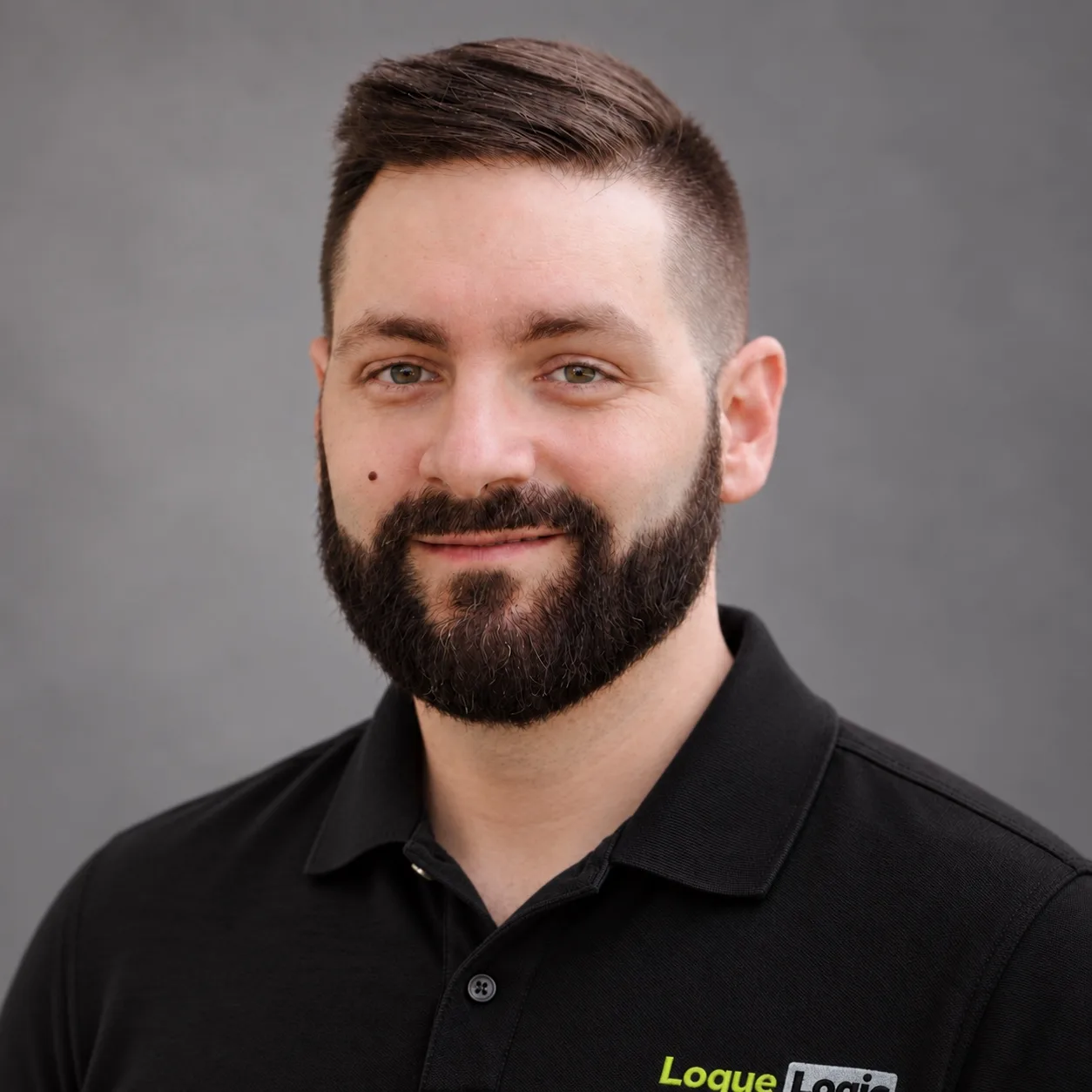
Andrew Price
Andrew has spent his career where technology, marketing and operations meet. He's a software engineer, an agency operator and the owner of an IT business, and he's built everything from customer-facing web applications to the internal systems companies use to manage leads, customers, billing and reporting.
At a full-service digital marketing agency, he manages the technology and reporting behind client portfolios with more than $1 million a month in combined media spend. He's also built software and automation for healthcare, marketing and IT companies, usually to replace manual processes and tools that don't talk to each other.
Andrew is the person who can sit in the business meeting, understand the problem, then go and build the thing that solves it. His approach to automation is practical. Make the work simpler, cut the steps nobody needs, and build something people will actually use.
More on Andrew's track record
A full-service digital marketing agency
Andrew owns the technology behind an agency running marketing programs for automotive, healthcare, legal and other clients. The engineering problem there is the one every agency has: the ad platforms, the CRM, the billing system and the reporting each hold a different version of the truth.
He built the connections that reconcile them, and the reporting layer over portfolios carrying more than $1 million a month in combined media spend, so attribution and pipeline are a query instead of somebody's afternoon in a spreadsheet. He's automated the agency's own back office alongside it: invoice processing and data extraction that used to be done by hand, reporting that assembles itself, and handoffs that used to wait for a person to notice them. Where the agency's software couldn't do the job, he built what it needed.
A national healthcare supply company
As Senior Director of Technology, Andrew works on the software and data behind a medical supply company in a heavily regulated corner of healthcare: patient and claims data, payment and remittance processing, reporting, workflow automation, and integrations between healthcare systems that were never designed to talk to each other.
One piece of that lets pharmacies send eligible diabetes and continuous glucose monitor referrals for Medicare Part B through the systems they already use, instead of by fax. The design goal was never to add another piece of software. It was to take work off the people already doing the job.
An IT managed services company he owns
Andrew built the platform it runs on: the customer-facing software, the account and onboarding flows, billing integrations, sign-in, device management workflows and the service infrastructure under all of it.
The service itself rolls endpoint security, threat protection, monitoring, patch management, remote support and cloud backup into one managed offering, which puts the real engineering in the seams. Provision a device, prove it's protected, bill for it, and do all three without anyone retyping anything.
Hands-on development
Andrew writes the code. He works mostly in JavaScript and TypeScript, with React, Node.js and Express, on MySQL and PostgreSQL, and he's built the parts that carry the risk: REST APIs, sign-in and permissions, payment flows, cloud infrastructure and third-party integrations. His range runs across Azure, Vercel, Appwrite, Auth0, Stripe, Twilio and GitHub, plus analytics and attribution platforms, CRM integrations, healthcare data workflows and AI-assisted development. What he's best at is connecting systems that were never designed to meet, and turning a messy manual process into software that holds up.
Marketing technology and analytics
His engineering sits on years of hands-on marketing work: Google Ads, paid social, analytics, conversion tracking, attribution, SEO, websites, CRM systems and marketing automation. That's why he doesn't stop at whether a campaign or a tool technically works. He asks the harder question. Does the whole path from marketing to lead to customer hold together, and where is it dropping records?
IT and infrastructure
Through the managed services company and his wider work, Andrew knows the operational side too: endpoint security, device monitoring, backups, patch management, remote support, Microsoft 365 and cloud services. It's the reason his automation survives contact with a real business. He knows what people are already working in, and what has to be true behind the scenes for a new process to run every day without someone minding it.

HIPAA, at national scale.
Running a business under HIPAA means every system that touches patient data has to be built with that in mind, from access control to audit trails. Chris did that as an operator, with his own company on the line.
Your invoice workflow or CRM sync isn't going to test our data discipline. It's already been tested somewhere stricter.
What is manual work costing your business?
Repetitive admin, missed follow-ups and disconnected systems take time away from running your business. Bring us one process that slows your team down. We'll help you understand what could improve, how much time you could recover, and what it might cost to implement.
Get My Free Workflow ReviewFree 30-minute conversation about how your business runs. Practical recommendations. No obligation.
Not sure where to start? That's what the free call is for. We'll walk through how your business runs and find the easiest wins, the places where automation and AI agents can take work off your team first.
Prefer to talk? Call (435) 243-5808 about your workflow, or .